
Philadelphia City Directory Holdings
The Philadelphia directory record trail is spread across several custodians, so a missing volume in one catalog is not proof that the year never existed. The Free Library directory guide describes alphabetical Philadelphia listings published from 1785 to 1935, while its Directory Fact Sheet and City Archives descriptions use an end year of 1936. The differing descriptions, and the known gaps, make the year and the holder part of every citation. Parkway Central’s Newspaper and Microfilm Center, City Archives, and the Historical Society of Pennsylvania each supply a different route into the shelf.
| Collection | Years | Where | Access |
|---|---|---|---|
| Philadelphia city directories | 1785–1935/36, with gaps | Free Library, City Archives, HSP holdings | Catalog, microfilm, or research visit |
| Boyd’s, Polk’s, Gopsill’s, and other microfilm runs | 1832–1931, annual gaps | Parkway Central Newspaper & Microfilm Center | Request the needed reel |
| City Archives directory group | 1785–1936 | Philadelphia City Archives | Archive research channel |
| Address telephone directories | 1927–1969 | Free Library microfilm | Address-first lookup |
| Cole’s Cross Reference / Reverse Directory | 1973–2007 | Free Library microfilm | Street and numeric-address trail |
| Telephone white and yellow pages | 1879–2007 | Free Library microfilm | Listed-party support |
A printed directory entry records a listing, not every person in a household and not legal ownership. For a specific year, ask the holder whether the volume is present, whether it is on microfilm, and whether the catalog uses the publisher name. The library recommends trying directory, register, annual, guide, and yearbook as catalog terms. Note: Retain the cover year, publisher, page or image, printed name, and exact street form in every Philadelphia citation.
Philadelphia Directory at Parkway
Parkway Central supplies the most practical year-by-year route for a name-to-address trail. The Free Library identifies its Social Science and History Department and Newspaper and Microfilm Center as directory access points. Its research service can search up to three directory years for one name, with three emailed scans priced at $10 and an additional $5 for paper shipping when requested. That is a focused fallback after a catalog or reel search fails, not a broad request to locate a person without a year or name.
The Free Library’s digitized 1910 Philadelphia Colored Directory item is a historically bounded community source with a distinct context. It can point to organizations, professions, churches, and printed names of that period. Read it alongside its item description and volume date rather than treating its classifications or its coverage as a present-day category.
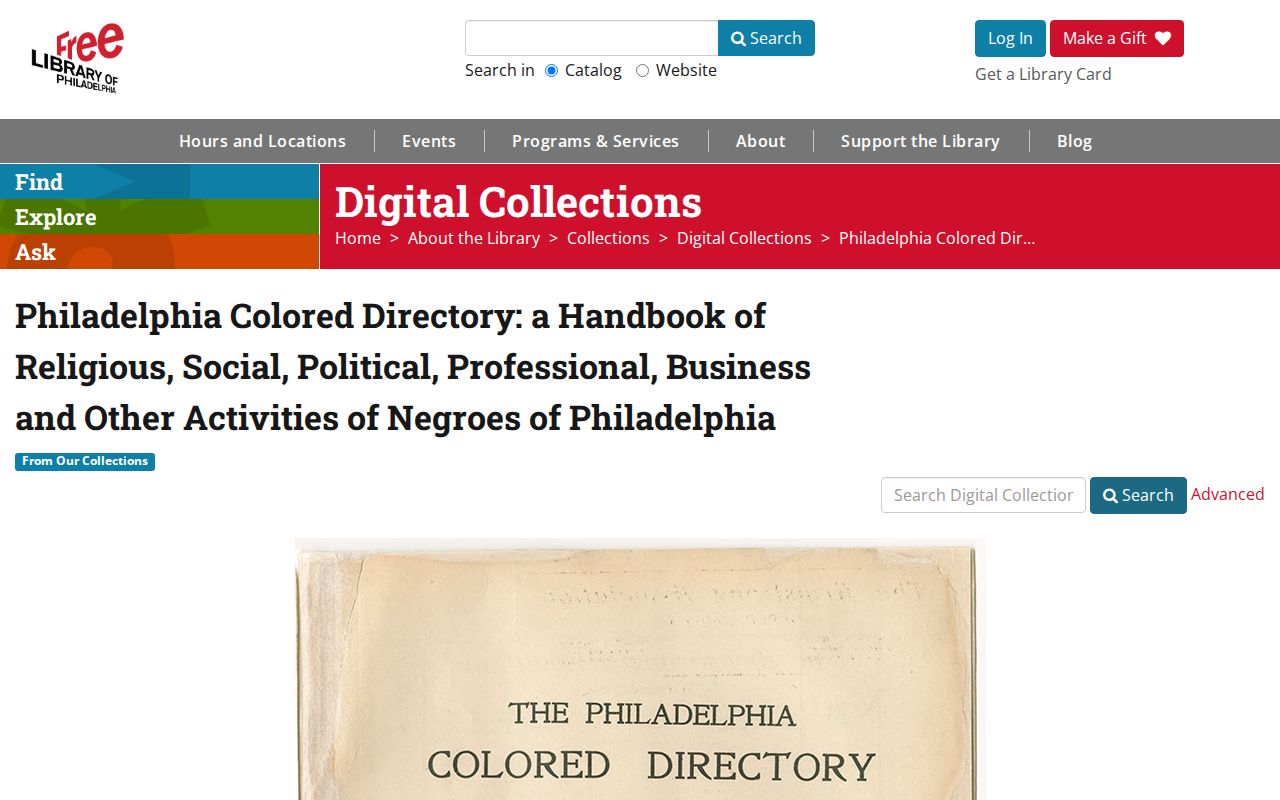
The digitized item is one access channel, while the broader Philadelphia directory run still requires catalog, microfilm, and archive checks for many years.
A later address trail has its own tools. The address telephone books are useful from 1927 through 1969, and Cole’s reverse volumes place streets in alphabetical order and addresses in numerical order. Cole’s entries usually include a listed resident name, phone number, and length of time at the address. They do not establish every occupant, but they can turn a house number into a narrow directory lead.
Philadelphia Directory Entry Fields
A typical Philadelphia directory entry is filed under a surname and gives a printed name, street address, and occupation. Some volume context adds a spouse notation, widow notation, another printed occupation detail, or the street form used at publication. The 1930 and 1936 volumes identify wives’ first names for male household heads. The entry itself must be read with the front matter, because abbreviation keys and institutional lists often appear there rather than beside a person’s name.
| Printed name | Use the spelling exactly as printed, including initials or abbreviations. |
|---|---|
| Occupation | A clue for separating similarly named people, not proof of identity by itself. |
| Street address | The listed number and street form, which may need a historic-name check. |
| Household clue | Some years give a spouse’s first name or a widow notation. |
| Listing limit | The entry does not prove ownership, kinship, an exact move date, or every resident. |
- Criss-cross directory
- A reverse directory arranged by street and numeric address, used to move from a place to a listed party.
- Householder index
- An index that identifies the person heading a listed household; it can omit other people at the address.
- Abbreviation key
- The volume’s explanation of shortened words, such as Wd. for widow of; photograph or transcribe it with the entry.
The Free Library guide identifies forms such as Do for ditto, Et. al. for and others, Jas. for James, and Wd. for widow of. A record note should preserve those terms rather than silently modernizing them. Note: A Philadelphia directory entry is strongest when its address, date, and name variation agree with an independent record.
Philadelphia Directories and Street Changes
An apparent missing address may be a street-name problem. The 1898 and 1910 Philadelphia directory volumes include tables that convert older street names to newer ones. Boyd’s Elite List and Official Street Guides, beginning in 1903 but incomplete, offer comparable street-name tables. Before rejecting a directory hit, search the printed old name, the later name, and the relevant year’s conversion table.
The City’s free Historic Streets Index is another name-change route. Use its Name field and change-list results to record the relationship between labels, then return to the directory volume. Historic numbers and streets should stay in the research notes even after a current address has been found. For a present-day parcel or a longer address-first chain, the Philadelphia street directory follows the modern record tools without rebuilding the historical shelf.
Philadelphia’s record geography makes this check especially important. Center City and older river wards often need a street or number conversion, while later growth areas are more likely to connect through permits, maps, directories, and assessment records. Neighborhood names may help discovery, but they are not the official street label used by the custodian.
Philadelphia Directory Cover-Year Trap
The cover year is not automatically the year a household lived at the printed address. Philadelphia directory information generally reflects the preceding year. That small timing shift matters when a move, death, marriage, or deed falls near the turn of a year. Search the target volume and the volume on each side of it, then state the cover year and the likely currency separately in the notes.
- 1785: the directory trail begins in the holders’ published descriptions.
- 1832–1931: Parkway Central holds Boyd’s, Polk’s, Gopsill’s, and other microfilm runs, with annual gaps.
- 1898 and 1910: city-directory conversion tables help reconcile changed street names.
- 1928 and 1931–34: the Free Library reports no copies for these known gaps.
- 1973–2007: Cole’s reverse directories extend the address-first trail after the city-directory era.
This chronology is a documented Philadelphia research quirk: an entry is a dated publication clue, not a continuous annual census. The gaps and different end years explain why a careful search checks both the Free Library and City Archives rather than filling an empty year with a guess.
Philadelphia Directory Household Trail
Follow a household through Philadelphia’s directory volumes by making one clean row of evidence for every year searched. A reliable starting point is a name, address, and approximate year. Compare spelling, occupation, address, and household clues before connecting two similar entries. The sequence narrows false matches because a person may be listed under initials, a shortened given name, a prior surname, or a transliterated name in different years.
- Find the earliest likely entry and transcribe the name, address, occupation, publisher, volume year, and page.
- Check the year before and after it, keeping every spelling change and address move in the same note.
- Use a reverse or address telephone directory where its date range fits to test a house-number lead.
- Pair the directory snapshots with the appropriate federal census household, while recognizing that the 1890 federal census was destroyed.
- Use City Archives vital or cemetery material, newspapers, and Register of Wills estate records only to corroborate a dated event or household transition.
A disappearance can mean a move, death, unlisted status, a misspelling, or a missing volume. It does not settle which one. Marriage, probate, and other modern event checks belong in the Philadelphia resident lookup workflow, where the custodian and copy rules are kept separate from the historical listing.
Philadelphia Directory Companions
City directories work best beside sources that answer a different question. Federal census records offer decennial household snapshots, though the 1890 loss creates a real break. City Archives holds municipal birth and death groups from 1860 to 1915, cemetery returns, and named local court naturalizations. The Register of Wills holds marriage licenses from 1885 and estate records, while the State and City archive channels divide older and current vital material by date and eligibility.
Maps add place, not people. Philadelphia’s Hexamer and Locher insurance mapping begins in the 1850s, and the Free Library’s map collection includes historic aerial, insurance-map, and overlay resources. A map can help distinguish a renamed street, a building replacement, or a subdivision from a gap in a person’s trail. It should not be used to claim who lived in a building.
Church, cemetery, newspaper, and family materials are valid fallback channels when a directory leaves a gap. No single official online index of Philadelphia parish registers was identified in the research. Identify the congregation or repository from the address and period instead of assuming that a broad online search will reproduce its records.
Philadelphia Directory Research Desks
The Philadelphia City Archives is the municipal fallback for a defined historical record group. Its current public listing gives 548 Spring Garden Street, weekday hours of 8:30 a.m. to 4 p.m., and 215-685-9401. Archives holdings include directories from 1785 to 1936, as well as deeds, permits, court, naturalization, and other municipal groups. Ask for the record group, date, and name or address that the directory work has already narrowed.
The City’s Archives holdings information shows why access depends on date range and record series.
The archive channel supports a targeted historical request; it is not an all-years online city directory search.
The Historical Society of Pennsylvania Discover tools add printed, manuscript, map, and microfilm discovery. HSP describes a Names Database with more than 258,000 extracted names and card indexes for historical materials including church, cemetery, probate, land, immigration, and vital sources. Its results locate a collection or card index, not a conclusion that a named person was at a current address.
HSP’s catalog interface is the source for this collection-discovery route.
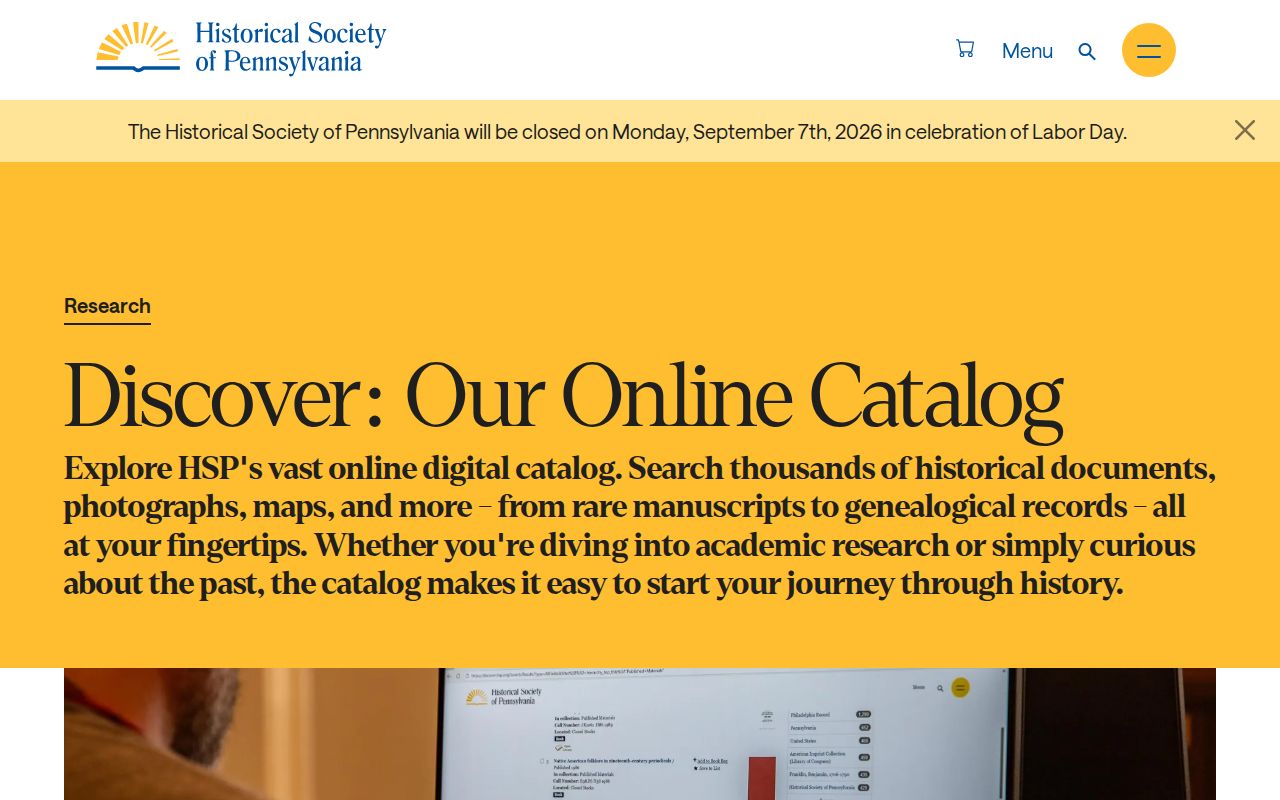
Use the result to frame a focused name, date, and collection request before scheduling on-site or mail research.
Philadelphia Directory Digitization Plan
Philadelphia’s historical shelf remains partly physical and split by custodian. On March 3, 2026, City Council Finance Committee testimony described a planned partnership to scan, index, and host roughly one million historical birth, death, marriage, naturalization, and property records, with free access proposed at archives, City Hall, libraries, and school locations. The testimony estimated about two years of work.
The official proceedings describe an initiative, not completed digitization. Until the work is finished, Philadelphia directory research still depends on the catalog, microfilm, digital items that already exist, archive access, and focused requests to the holder. Note: Confirm a collection’s current availability before a visit or a paid request because interfaces and service rules can change.